
What Is the Difference Between Arrhythmia and Dysrhythmia?
If your doctor mentioned “arrhythmia” or “dysrhythmia” during a recent appointment, you might be wondering whether these two words describe different conditions requiring different treatments. Medical terminology can be confusing, especially when similar-sounding terms appear in your diagnosis or medical records.
Below, our specialists in advanced cardiac diagnostics and treatment at CardioCare will clarify the difference between arrhythmia and dysrhythmia and explain what these terms mean in relation to your heart health.
Are Arrhythmia and Dysrhythmia the Same Thing?
The short answer is yes — cardiac arrhythmia and dysrhythmia both describe the same condition: an irregular or abnormal heartbeat. The confusion stems from their etymology. Arrhythmia combines the Greek “a-” (without) and “rhythmos” (rhythm), while dysrhythmia uses “dys-” (bad/abnormal). Despite this nuance, doctors use the terms interchangeably to refer to any deviation from a normal heart rhythm.
The medical community has largely adopted “arrhythmia” as the standard term, though “dysrhythmia” still appears in some clinical settings, nursing literature, or older medical records. The question “Are arrhythmia and dysrhythmia the same thing?” arises frequently, as patients may assume different terms refer to distinct conditions. However, what truly matters is not which word your doctor uses, but understanding what’s happening with your heartbeat and how to manage rhythm abnormalities effectively.
What Is a Heart Arrhythmia?
A heart arrhythmia (or cardiac dysrhythmia) occurs when your heart doesn’t beat in its normal rhythm. Your heart normally follows a steady, coordinated pattern called sinus rhythm, controlled by electrical signals that travel through specialized pathways in the heart tissue. When these electrical signals malfunction or the heart’s tissues change, it results in an abnormal rhythm that can manifest as a heart rate that’s too fast, too slow, or irregular.
The heart’s natural pacemaker, located in the right atrium near the tricuspid annulus, sends electrical impulses through the upper (atria) and lower chambers (ventricles) to maintain proper blood flow. When this system misfires, it can lead to irregular rhythms, from harmless skipped beats to life-threatening conditions needing urgent care.

What Causes Irregular Heart Rhythms?
Cardiac arrhythmias result from malfunctions in the heart’s electrical system or changes to the heart tissue itself. Understanding these risk factors helps explain why irregular rhythms develop and can help ensure the appropriate treatment options.
Electrical System Disruptions
Your heart contains specialized cells that generate and conduct electrical signals, coordinating each heartbeat. When these signals fire incorrectly or travel along abnormal pathways, they disturb the rhythm.
This can happen due to:
- Damage to the heart’s electrical pathways from myocardial infarction (heart attack);
- Structural heart disease affecting signal conduction;
- Abnormal electrical connections present from birth, as seen in conditions like Wolff Parkinson White syndrome;
- Increased vagal tone affecting the heart’s natural pacemaker;
- Electrolyte or metabolic disarray.
Heart Tissue Changes
Structural changes in heart tissue, from scarring after surgery or heart attacks to conditions like ischemic heart disease and heart failure, disrupt normal electrical signals. These changes increase the risk of both atrial and ventricular arrhythmias. Diseases like hypertrophic cardiomyopathy also alter heart structure, making irregular rhythms more likely and harder to resolve without targeted treatment.
Risk Factors and Triggers
Several factors increase the likelihood of developing cardiac arrhythmias, including:
- High blood pressure places mechanical stress on heart tissue;
- Coronary artery disease limits the blood supply to the heart muscle;
- Electrolyte imbalances affect electrical signal transmission;
- Thyroid disorders influence heart rate and rhythm;
- Certain medications, including digoxin toxicity, can trigger abnormal rhythms;
- Lifestyle factors like excessive caffeine, alcohol, or smoking;
- Sleep disorders, especially sleep apnea;
- Family history of heart rhythm disorders.
Concerned About Your Heart Rhythm?
Don't wait to address irregular heartbeat symptoms. Schedule a comprehensive evaluation with CardioCare to get answers and expert care.
Types of Heart Arrhythmias
Cardiac arrhythmias are classified based on two things: where they originate in the heart and how they affect heart rate. Understanding these categories helps explain symptoms and treatment approaches.
Arrhythmias Affecting the Upper Chambers
| Type | Description |
|---|---|
| Atrial fibrillation | Chaotic signals in the atria; increases stroke and heart failure risk. |
| Atrial flutter | Fast, regular atrial rhythm; more organized than AFib. |
| Supraventricular tachycardia | Rapid rhythm above ventricles, including SVT and atrial paroxysmal tachycardia. |
| Atrioventricular reentrant tachycardia | Electrical loop between the atria and ventricles causing sudden, rapid heartbeats. |
| Atrial premature complex | Early extra beat from the atria; often felt as a skipped heartbeat. |
Arrhythmias Affecting the Lower Chambers
| Type | Description |
|---|---|
| Ventricular tachycardia | Fast rhythm from the ventricles that may impair blood flow or cause cardiac arrest. |
| Ventricular fibrillation | Disorganized rhythm that stops the heart’s pumping — a medical emergency. |
| Premature ventricular contractions (PVCs) | Extra beats from the ventricles; often harmless, but can signal underlying issues. |
Bradyarrhythmias & Tachyarrhythmias (Rate-Based)
| Type | Description |
|---|---|
| Bradyarrhythmia (bradycardia) | Heart rate below 60 bpm; may cause fatigue, lightheadedness, or fainting. |
| Tachyarrhythmia (tachycardia) | Heart rate above 100 bpm; includes sinus tachycardia, SVT, and VT. |
| Atrioventricular block (AV block) | Signal delay or blockage between atria and ventricles causing slow or irregular beats. |
Recognizing the different types of heart arrhythmias, whether they originate in the upper or lower chambers or relate to the heart rate, is key to proper diagnosis, treatment, and long-term management.
While some arrhythmias are harmless, others can be life-threatening. If you experience symptoms like palpitations, dizziness, or fainting, seeking expert evaluation is critical. Understanding these classifications is a foundational first step toward making informed decisions about your heart health.
Recognizing Arrhythmia Symptoms
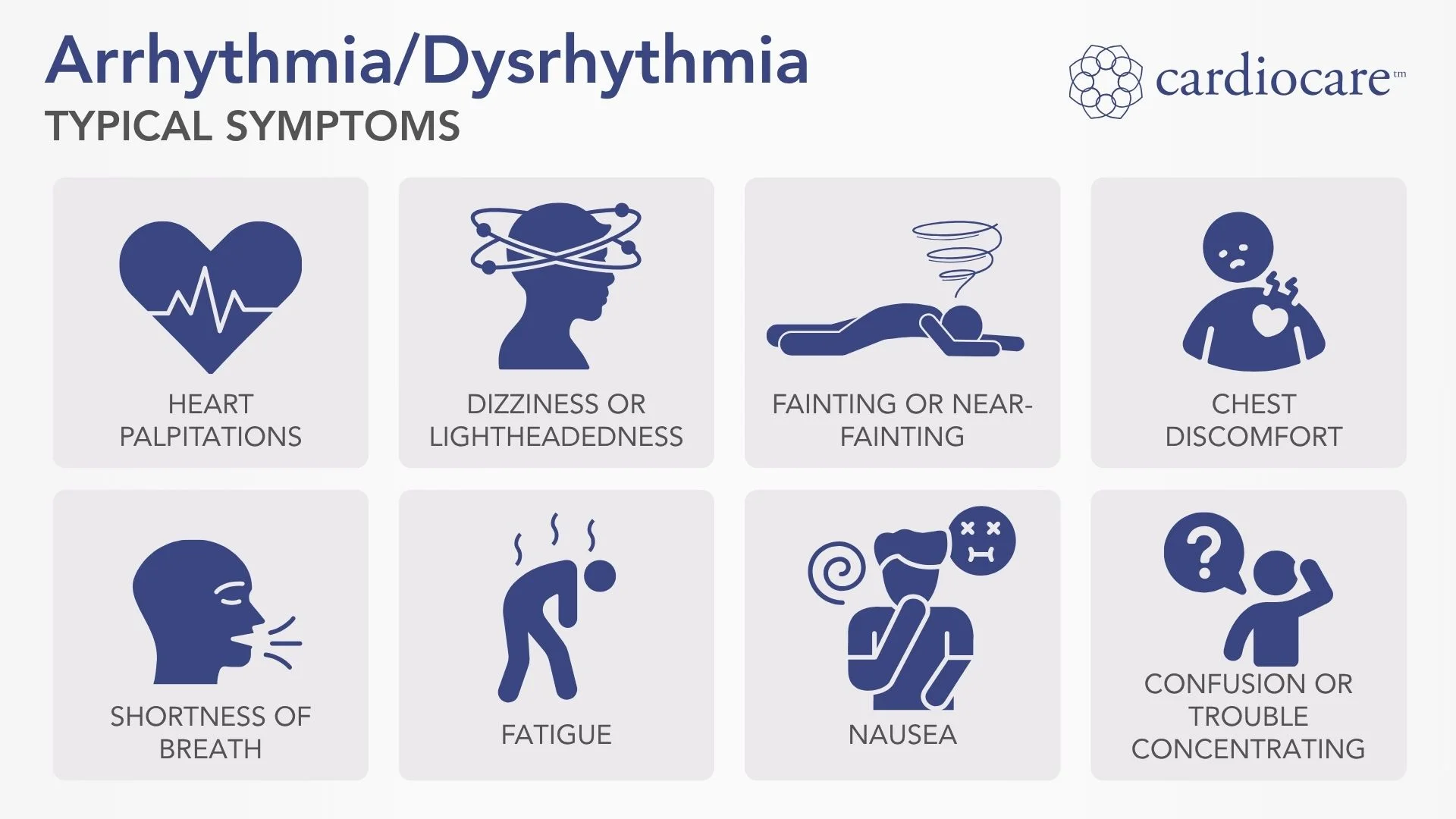
Many arrhythmias don’t cause any symptoms and are only found during routine exams. However, when symptoms do appear, they vary by type and severity, making it important to spot warning signs that may require medical attention.
Common symptoms reported by patients with arrhythmia:
- Palpitations such as fluttering, pounding, or skipped heartbeats;
- Chest discomfort, including pressure, tightness, or mild pain;
- Shortness of breath during activity or at rest;
- Dizziness, especially with position changes or irregular rhythm;
- Fatigue that feels persistent and can worsen with activity;
- Fainting or near-fainting with sudden lightheadedness or blackout;
- Nausea.
Even if symptoms seem mild or come and go, don’t ignore them. You’ll want to pay attention to when they happen and what triggers them. This information is valuable for accurate diagnosis and treatment planning. If you notice these signs, the cardiology experts at CardioCare are here to help with advanced testing, personalized evaluation, and expert care to keep your heart in rhythm.
How Doctors Diagnose Heart Rhythm Disorders
Diagnosing cardiac arrhythmias isn’t always straightforward, and it involves a structured approach using clinical evaluation and testing to identify the rhythm issue and its cause. Keep in mind that the terms arrhythmia and dysrhythmia are used interchangeably and don’t affect the diagnostic process.
Initial Assessment
- A thorough physical exam assessing heart rate, blood pressure, and signs of heart disease;
- Detailed medical history exploring symptoms, family history, and risk factors;
- Review of medications and substances that might affect heart rhythm;
- Discussion of when symptoms occur and what triggers them.
Electrocardiogram Testing
An electrocardiogram (EKG/ECG) is the primary diagnostic tool for rhythm disorders. This test records the heart’s electrical signals and reveals:
- Whether you have a normal rhythm or an abnormal rhythm;
- The specific type of arrhythmia present;
- Heart rate patterns and irregularities;
- Evidence of previous heart damage;
- Long QT syndrome and other electrical abnormalities.
An EKG captures your heart’s electrical signals at a single moment. When arrhythmias occur intermittently, heart rhythm monitoring provides extended observation over days or weeks, capturing irregular rhythms when symptoms occur.
Advanced Cardiac Imaging
Echocardiograms use sound waves to create detailed images of the heart’s structure and function. They help detect valve issues, signs of heart failure, damage from past heart attacks, and scar tissue linked to arrhythmias. The test also measures chamber size and wall thickness, factors that can provide insight into conditions that may trigger irregular rhythms.

Stress Testing and Additional Evaluations
Stress tests evaluate how your heart responds to physical exertion, revealing arrhythmias that occur during activity when the heart’s oxygen demands increase. Blood work assesses factors affecting heart rhythm, including thyroid function, electrolyte levels like potassium and magnesium, and markers of heart disease or inflammation.
For complex cases, additional cardiac diagnostic services may include electrophysiology studies that map your heart’s electrical system. Thin wires are threaded through blood vessels to record signals, pinpoint abnormal rhythm sources, and sometimes treat them with catheter ablation during the same procedure.
Treatment Options for Heart Rhythm Disorders
Treatment for cardiac arrhythmias depends on the type of irregular rhythm, its severity, underlying causes, and how symptoms affect your daily life. The goal is to restore normal rhythm, control heart rate, prevent serious complications, and improve quality of life. Here are some treatment options.
Lifestyle Modifications and Risk Factor Management
For many people, addressing underlying conditions and making lifestyle changes is a first and important step in managing cardiac dysrhythmia:
- Managing high blood pressure and coronary artery disease;
- Controlling diabetes and maintaining healthy blood sugar levels;
- Treating thyroid disorders that affect heart rhythm;
- Limiting caffeine, alcohol, and tobacco use;
- Managing stress through relaxation techniques;
- Getting adequate sleep and addressing sleep disorders such as sleep apnea;
- Maintaining a healthy weight.

Medications for Rhythm Control
Various medications help manage irregular rhythms by affecting the heart’s electrical system, controlling heart rate, or preventing serious complications:
- Anti-arrhythmic agents: Regulate the heart’s electrical signals to maintain a normal rhythm.
- Rate control medications: Manage a rapid heart rate without restoring normal rhythm, such as beta blockers and calcium channel blockers.
- Blood thinners: Reduce the risk of blood clots in conditions like atrial fibrillation and atrial flutter.
Medical Procedures and Devices
When medications aren’t enough, more advanced treatments become necessary:
- Catheter ablation: Destroys small areas of heart tissue, causing abnormal rhythms, often treating atrial fibrillation, flutter, and some ventricular arrhythmias.
- Pacemakers: Send electrical signals to correct slow heart rates, preventing symptoms like dizziness and fatigue.
- Implantable cardioverter-defibrillators (ICDs): Monitor heart rhythm and deliver shocks to stop dangerous ventricular arrhythmias and prevent sudden cardiac death.
- Cardioversion: Delivers a controlled shock to restore normal rhythm in atrial fibrillation or flutter.
- Heart surgery: Addresses structural problems that cause arrhythmias when less invasive treatments aren’t suitable.
Successfully managing cardiac arrhythmia or dysrhythmia requires ongoing attention to both medical treatment and lifestyle factors that affect heart health.
Trust CardioCare with Your Heart’s Rhythm
Cardiac arrhythmia and dysrhythmia describe the same condition — an abnormal heart rhythm that can range from harmless to life-threatening. Whether your doctor uses the term “arrhythmia”, “dysrhythmia”, or “irregular heartbeat”, what matters most is getting an accurate diagnosis and appropriate treatment.
Don’t rely on just any team to take care of your health. At CardioCare, our experienced cardiologists provide comprehensive evaluation and treatment for all types of heart rhythm disorders. Our board-certified cardiologists are proud to provide expert, compassionate care for our patients. Contact us today to schedule an evaluation and take the first step toward understanding and managing your heart rhythm.

LOCATIONS
Contact us for more information.